
 876 Civic Center Dr, Niles, IL 60714, United States
Find a time that fits your day
876 Civic Center Dr, Niles, IL 60714, United States
Find a time that fits your day
Learn the warning signs of gum disease and how gum disease treatment at Smiles of Niles can protect your teeth and health. Schedule your exam today!
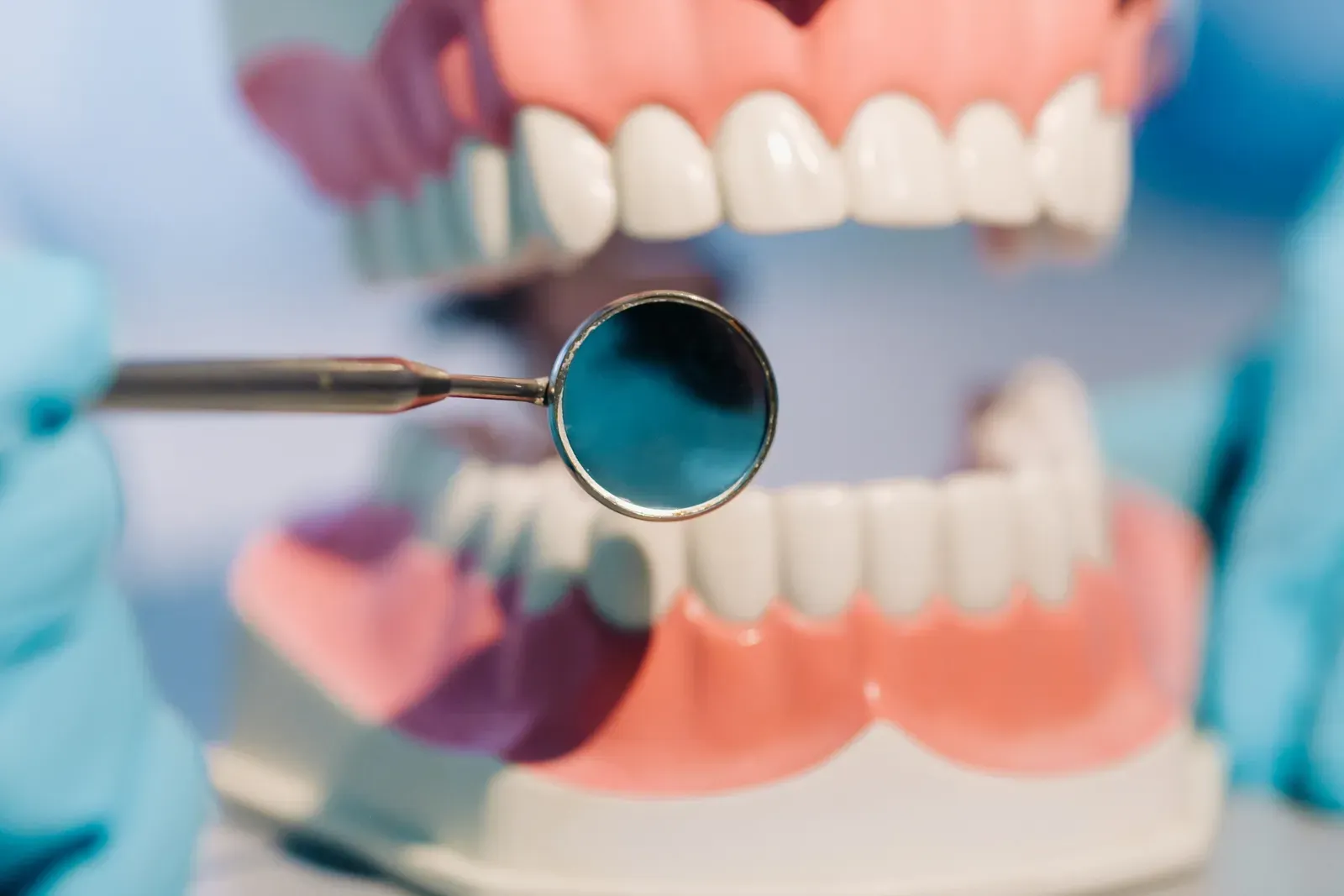
Most people think of gum disease as something that happens to someone else - maybe an older relative, or someone who skips flossing entirely. The truth is far less forgiving. Gum disease, also called periodontal disease, affects nearly half of adults over the age of 30 in the United States, and many of them do not realize it until the damage is already underway. It develops quietly, often without pain in its earliest form, which is exactly why it catches so many patients off guard.
At Smiles of Niles, we see the full spectrum of gum disease in our Niles, Illinois practice - from mild inflammation that responds quickly to a professional cleaning, to more advanced cases that require deeper, more deliberate treatment. What we want every patient to understand is that gum disease is not a life sentence. It is a manageable, treatable condition when it is caught early and addressed with the right combination of professional care and daily habits.
This article walks through how gum disease develops, the signs worth paying attention to, and what treatment actually looks like. Whether you have been told you have early gum inflammation or you are simply curious about protecting your smile for the long run, understanding this condition is the first step toward keeping it from becoming a bigger problem.
Gum disease begins with something nearly everyone has dealt with at some point: plaque. This sticky film of bacteria forms on your teeth constantly, and if it is not removed thoroughly through brushing and flossing, it hardens into tartar within a matter of days. Tartar cannot be brushed away. Once it forms along and below the gumline, it becomes a breeding ground for bacteria that irritate the surrounding gum tissue.
That irritation is where gum disease begins. Your body's immune response to the bacterial buildup causes inflammation, which shows up as redness, puffiness, and bleeding. In its earliest stage, this inflammation is called gingivitis, and it is entirely reversible with proper cleaning. The trouble starts when gingivitis goes untreated and the infection works its way deeper, affecting the connective tissue and eventually the bone that holds your teeth in place.
Genetics, smoking, certain medications, hormonal changes, and conditions like diabetes can all make someone more susceptible to gum disease, even with reasonably good home care. This is part of why routine professional evaluation matters so much - some patients are fighting a losing battle against plaque buildup no matter how carefully they brush, simply because of factors outside their control.
One of the frustrating things about gum disease is that it often does not hurt until it has progressed significantly. That is why we encourage patients to pay attention to subtler signals rather than waiting for pain to show up. Catching these signs early is what allows us to reverse the condition rather than simply manage it.
Not all gum disease looks the same, and the treatment we recommend depends heavily on how far it has progressed. Understanding these stages helps explain why your dentist might suggest a routine cleaning for one patient and a more involved procedure for another.
Gingivitis is inflammation limited to the gum tissue itself, without any loss of the bone or ligaments that anchor your teeth. Gums may look red or swollen and bleed easily, but the damage has not yet become permanent. A professional cleaning combined with improved home care is usually enough to restore full gum health at this stage.
Once the infection spreads below the gumline and begins breaking down the bone and ligament structures, it is classified as periodontitis. Pockets form between the teeth and gums, giving bacteria a protected space to continue causing damage. This stage cannot be reversed, but it can be controlled and stabilized with the right treatment, preventing further bone loss and tooth movement.
Advanced periodontitis represents the most serious stage, where significant bone loss has occurred and teeth may become loose enough to require splinting or, in some cases, extraction. We always aim to intervene well before a patient reaches this point, which is part of why we take gum evaluation seriously at every routine visit, not just when a patient mentions a problem.
Treatment is never one-size-fits-all, and the plan we recommend depends on how advanced the disease is and how your tissue responds to initial care. Our gum disease treatment approach starts with a thorough evaluation, including measuring pocket depths around each tooth and reviewing your dental history before deciding on the right path forward.
For gingivitis, a professional cleaning along with a review of your brushing and flossing technique is often sufficient. For periodontitis, we typically move to scaling and root planing, a deeper cleaning procedure that removes plaque and tartar from below the gumline and smooths the tooth root so gum tissue can reattach more easily. This is usually done in sections, with a local anesthetic to keep you comfortable throughout.
In cases where bacteria are particularly stubborn or pockets are deep, we may use laser dentistry to target infected tissue with precision, minimizing bleeding and speeding up healing compared to traditional methods. We also monitor patients closely after initial treatment, because gum disease has a tendency to resurface if follow-up care and home habits slip.
If gum disease has already contributed to tooth damage or loss, we also coordinate care across related services. For example, patients who have lost teeth to advanced periodontitis sometimes explore dental implants once their gum health has stabilized, since healthy gum and bone tissue are essential for a successful, long-lasting implant.
It surprises a lot of patients to learn that gum disease has been linked to health concerns well beyond the mouth. Chronic inflammation from untreated periodontitis has been associated with increased risk for heart disease, complications with diabetes management, and even adverse outcomes during pregnancy. The mouth is not an isolated system - bacteria and inflammatory markers from infected gum tissue can enter the bloodstream and affect the rest of the body.
This connection is part of why we encourage patients with diabetes, cardiovascular conditions, or autoimmune disorders to be especially diligent about gum checkups. Treating gum disease is not just about saving teeth, though that alone is reason enough. It is also about reducing a source of chronic inflammation that your body is otherwise working overtime to manage.
We also see a connection between gum health and the success of other dental treatments. Patients considering orthodontics or cosmetic procedures benefit from addressing gum disease first, since healthy, stable gum tissue provides a much better foundation for tooth movement and long-term results.
Treating gum disease is only half the equation. Keeping it from returning requires a combination of consistent home care and regular professional maintenance. Patients who have been treated for periodontitis often move to a schedule of more frequent cleanings, sometimes every three to four months instead of the standard six, because their gum tissue needs closer monitoring to stay stable.
At home, the fundamentals matter more than any gadget or specialty product. Brushing twice daily with a soft-bristled brush, flossing once a day, and replacing your toothbrush every three months all make a measurable difference. For patients who struggle with flossing technique, a water flosser can be a helpful addition, particularly around areas with deeper pockets or dental work.
Routine visits for dental cleaning and exams remain the single most effective tool for preventing a recurrence, since they allow us to catch early inflammation before it has a chance to progress. We also talk openly with patients about lifestyle factors like smoking and diet, since both have a direct, measurable effect on how well gum tissue heals and holds up over time.
Key Takeaways
Gingivitis, the earliest stage, can be fully reversed with a professional cleaning and better daily hygiene. Once it progresses to periodontitis and bone loss has occurred, treatment focuses on stopping further damage and stabilizing the gums rather than fully reversing the condition.
We use a local anesthetic to numb the treatment area, so most patients feel pressure rather than pain during the procedure. Some mild soreness or sensitivity afterward is normal and typically resolves within a few days.
Many patients with a history of periodontitis benefit from cleanings every three to four months instead of the typical six-month interval. Your dentist will recommend a schedule based on how your gums respond to treatment and how stable your pocket depths remain over time.
Not necessarily. Most cases of gum disease, even moderate periodontitis, can be managed effectively with professional treatment and consistent follow-up care. Tooth loss becomes a real risk only when the disease is left untreated for an extended period and bone support is severely compromised.
We measure the depth of the space between your teeth and gums at several points around each tooth, check for bleeding and recession, and review your dental X-rays for signs of bone loss. This gives us a clear picture of whether you have gingivitis, periodontitis, or healthy gum tissue.
Gum disease is common, but it is not something to brush off. The sooner it is identified, the simpler and less invasive the treatment tends to be - which is exactly why routine checkups matter even when nothing seems wrong. A little bleeding during flossing or gums that look slightly redder than usual are worth mentioning at your next visit, not waiting out until your next scheduled appointment.
Our team at Smiles of Niles takes a thorough, individualized approach to every stage of gum health, from early prevention to more involved periodontal treatment. If you have noticed any of the warning signs we covered here, or it has simply been a while since your last exam, there is no better time to get your gums checked and get a clear plan in place for keeping your smile healthy for years to come.
Interested in the topics discussed in this guide? Explore our specialized treatments and services.
Your Smile Awaits
Schedule your visit with Smiles of Niles today and experience dental care that's gentle, modern, and genuinely welcoming.