

 876 Civic Center Dr, Niles, IL 60714, United States
Find a time that fits your day
876 Civic Center Dr, Niles, IL 60714, United States
Find a time that fits your day
Learn how dental implants work, what they cost, and what recovery really feels like. Discover if you're a candidate at Smiles of Niles. Call now!

Missing a tooth changes more than your smile. It can shift the way you chew, the way your jawbone holds its shape over time, and even the confidence you feel speaking up in a meeting or laughing at dinner with friends. Dental implants have become the standard that dentists recommend for replacing missing teeth, and for good reason: they are the only tooth replacement option that replaces the root as well as the crown.
If you've been living with a gap, a loose partial denture, or a tooth that's been giving you trouble for years, you've probably heard the term "dental implant" tossed around by friends, family, or your own dentist. But what actually happens during implant treatment, how long does it take, and is it really worth the investment? This article walks through the real, practical details so you can have an informed conversation at your next visit.
At Smiles of Niles, we see patients at every stage of this decision - some who are ready to move forward right away, and others who just want to understand their options before committing to anything. Our goal here is the same as it is in the chair: give you clear, honest information so you can make the choice that's right for your mouth and your life.
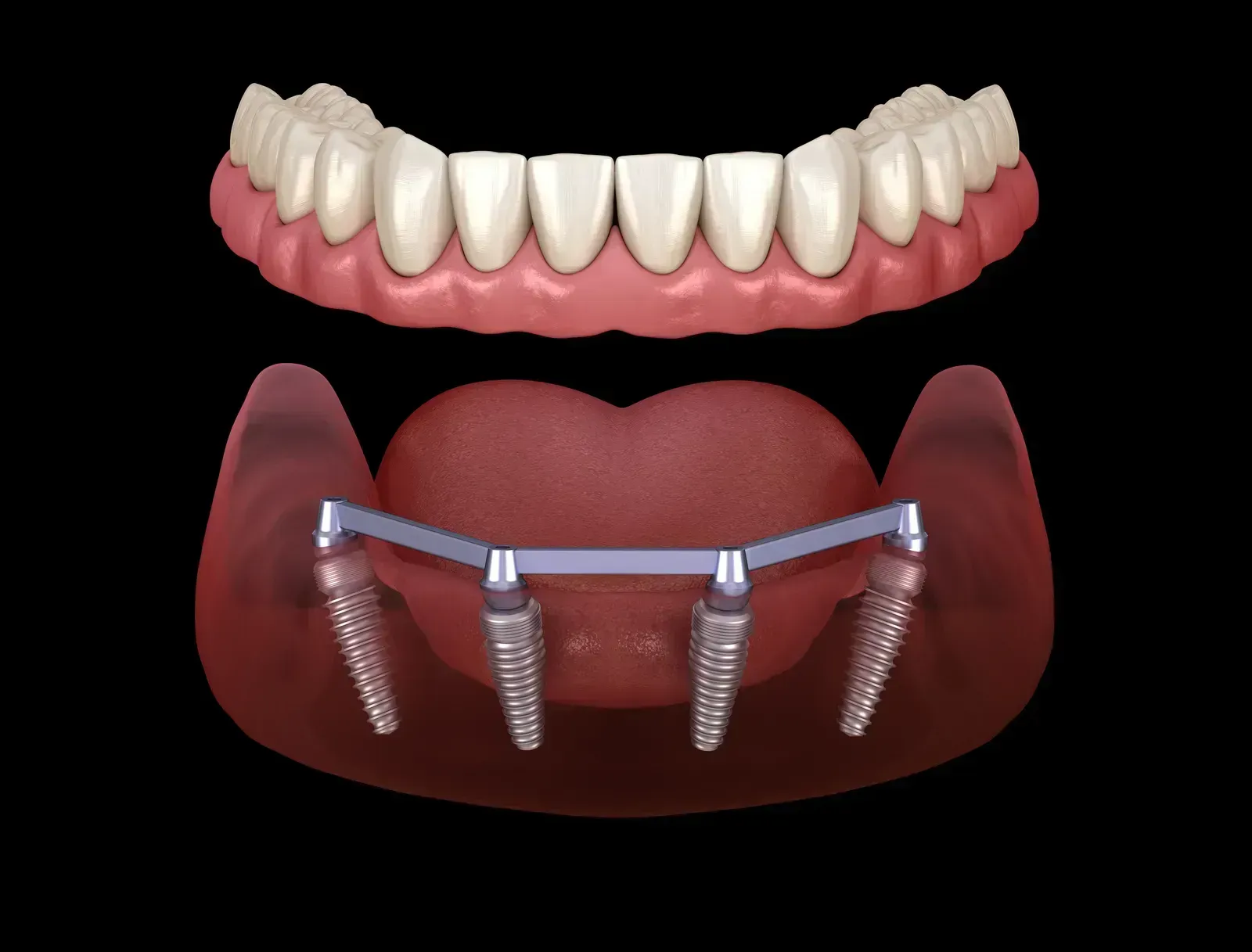
A dental implant is a small titanium or titanium-alloy post that's placed directly into the jawbone, acting as an artificial tooth root. Once it's in place and has fused with the surrounding bone - a process called osseointegration - a custom-made crown, bridge, or denture is attached on top. The result looks, feels, and functions like a natural tooth, because it's anchored the same way a natural tooth root is anchored.
This is the key difference between implants and other replacement options like bridges or removable dentures. A bridge relies on neighboring teeth for support, which means those teeth have to be filed down to hold it in place. A denture sits on top of the gum tissue and can shift or click when you eat or speak. An implant stands on its own, supported by bone, without putting stress on any of your remaining natural teeth.
Implants can replace a single tooth, several teeth in a row, or - when combined with a full arch of replacement teeth - an entire row of missing teeth. The titanium post itself is biocompatible, meaning the body generally accepts it without irritation, which is part of why implants have such a strong long-term track record in modern dentistry.
Most healthy adults missing one or more teeth are candidates for implants, but a few factors matter more than age. The most important is having enough healthy jawbone to support the implant post. When a tooth has been missing for a long time, the bone in that area can shrink, which is why some patients need a bone graft before implant placement. This isn't unusual, and it doesn't rule anyone out - it just adds a step to the timeline.
Gum health matters too. Active gum disease needs to be treated and stabilized before implant surgery, since healthy gum tissue is part of what keeps an implant secure over the long run. We also take a close look at habits like smoking and conditions like uncontrolled diabetes, both of which can slow healing and affect how well the implant integrates with the bone. None of these are automatic disqualifiers, but they do shape how we plan treatment.
Implant treatment isn't a single appointment - it's a process that unfolds over a few months, and understanding the stages up front makes the whole experience far less intimidating. The first visit is always a consultation, where we take detailed images of your jaw, review your health history, and map out a plan specific to your mouth. This is also when we discuss whether a bone graft or other preparatory step is needed.
Once the plan is set, the implant post is surgically placed into the jawbone under local anesthesia. For many patients, this part of the process is far more comfortable than they expect - most describe it as similar to having a tooth extracted. After placement, the bone needs time to fuse around the post, which typically takes three to six months. During this healing window, a temporary tooth can often be worn so you're not left with a visible gap.
Once osseointegration is complete, a small connector piece called an abutment is attached to the implant, and finally, a custom-crafted crown is placed on top. That crown is shaded and shaped to match your surrounding teeth, so the finished result blends in naturally. From the initial consultation to the final crown, the full process generally takes anywhere from three to eight months, depending on how much preparatory work is needed and how quickly your bone heals.
The recovery timeline for implant surgery surprises a lot of patients because it's shorter and more manageable than they anticipated. Most people experience some swelling, mild bruising, and tenderness around the surgical site for three to five days, which responds well to over-the-counter pain relievers and an ice pack. Many patients return to work or normal daily activities within a day or two, as long as the work isn't physically strenuous.
During the initial healing phase, we recommend sticking to softer foods - think scrambled eggs, soup, yogurt, and smoothies - for about a week, gradually reintroducing firmer foods as comfort allows. Keeping the surgical area clean is important, but you'll want to avoid brushing directly on the implant site until it's had time to settle. We'll give you specific aftercare instructions tailored to your procedure, including when it's safe to resume your normal brushing and flossing routine around the area.
The longer healing phase - osseointegration - happens quietly in the background over the following months and doesn't typically come with noticeable discomfort. You'll come in for a few follow-up visits so we can monitor how the bone is integrating with the implant before moving forward to the final restoration. Patience during this stage pays off: it's what gives the implant its exceptional long-term stability.
With proper care, the titanium post of a dental implant can last a lifetime. It's genuinely one of the most durable solutions in modern dentistry, and studies following patients for decades after implant placement continue to report success rates well above 90%. The crown attached on top is the part most likely to need attention eventually, since it endures the daily wear of biting and chewing, similar to how a natural tooth's enamel wears down over time.
A crown typically lasts 10 to 15 years or longer before it might need replacement due to normal wear, though many patients get even more use out of theirs with good habits. The single biggest factor in implant longevity isn't the materials - it's how well the surrounding gum tissue and bone are maintained. Treating an implant like a natural tooth, with regular brushing, flossing, and dental visits, is what allows it to go the distance.
Compare that to a traditional bridge, which often needs replacement after 10 to 15 years, or a removable denture, which may need adjustments or relining every few years as your jawbone changes shape. The upfront investment in an implant is higher, but the long-term value - fewer replacements, fewer adjustments, and a more stable bite - is a major part of why so many dentists recommend it as the first choice for tooth replacement.
Cost is usually the first question patients ask, and it's a fair one - implants are a bigger upfront investment than a filling or even a bridge. The total cost depends on several factors: how many teeth need to be replaced, whether a bone graft is necessary, the type of restoration (a single crown versus a full-arch solution), and the materials used for the final tooth. A single implant with a crown generally runs higher than a bridge initially, but the calculation changes when you factor in how long each option lasts.
Many dental insurance plans now cover at least a portion of implant treatment, particularly the restorative crown portion, even if the surgical placement isn't fully covered. We work with patients to review their specific benefits and explain exactly what's covered before any treatment begins, so there are no surprises on your statement. For patients without insurance or with a plan that covers less than expected, financing options can spread the cost into manageable monthly payments.
It's worth thinking about implant costs over the long term rather than just the initial price tag. A bridge or denture that needs replacement, adjustment, or repair every several years adds up over a lifetime, sometimes exceeding the total cost of an implant that was placed once and properly cared for. When you sit down with our team to talk through options, we'll walk through the full financial picture, not just the number for the first procedure.
Key Takeaways
The surgical placement is done under local anesthesia, so you shouldn't feel pain during the procedure itself. Afterward, most patients describe the discomfort as mild to moderate, similar to a tooth extraction, and it's usually well managed with over-the-counter pain medication for a few days.
Yes, in most cases. If the jawbone has thinned out from years without a tooth root to stimulate it, we can often rebuild it with a bone graft before placing the implant. This adds some time to the overall process but doesn't prevent most patients from being good candidates.
Care for an implant the same way you care for your natural teeth: brush twice daily, floss around it carefully, and keep up with regular dental checkups and cleanings. Since implants can't get cavities, the main focus is protecting the gum and bone tissue that support it.
A bridge uses the neighboring teeth as anchors, which requires altering those healthy teeth to support it. An implant stands independently in the jawbone, so it doesn't rely on or put strain on any adjacent teeth, which is why it tends to preserve more of your natural tooth structure over time.
A single implant generally supports one crown, replacing one missing tooth. However, a small number of strategically placed implants can support a full bridge or a complete set of replacement teeth across an entire arch, which is often more efficient than placing a separate implant for every missing tooth.
Choosing how to replace a missing tooth is a personal decision, and it deserves more than a quick answer. Dental implants represent a meaningful investment of time and resources, but for the right candidate, they offer something no other option quite matches: a replacement tooth that looks natural, functions like the real thing, and protects the health of your jawbone for years to come.
If you're weighing your options or simply curious about whether an implant makes sense for your situation, the best next step is a conversation with a dentist who can evaluate your specific mouth, bone structure, and goals. Our team at Smiles of Niles is glad to walk through the details with you, answer your questions honestly, and help you decide on a path forward that fits both your smile and your budget.
Interested in the topics discussed in this guide? Explore our specialized treatments and services.
 Service
 Service
Rebuild Your Smile with Precision and Care At Smiles of Niles Family Dental, we understand that missing teeth can impact both your confidence and oral health. That’s why we offer state-of-the-art dental implants tailored to your unique needs. Your journey begins with a comprehensive consultation, where we use 3D imaging, high-resolution X-rays, and digital scans to assess your oral health and design a personalized treatment plan. For patients who feel anxious about dental procedures, we also offer sedation options to help you stay comfortable and relaxed every step of the way. Your Journey to a Restored Smile A Welcoming Experience at Smiles of Niles From the moment you walk into our Niles, IL dental office, you’ll be greeted by a compassionate team dedicated to making your visit as smooth and stress-free as possible. We believe that restoring your smile is a collaborative process, built on trust, communication, and expert care. Our friendly staff is here to guide you, answer your questions, and support you throughout your implant journey. A Treatment Plan Designed Just for You During your initial consultation, our team will take the time to understand your goals, concerns, and lifestyle needs. Using advanced imaging technology, we carefully plan your dental implant placement, ensuring your new teeth are strong, natural-looking, and fully functional. This customized approach allows you to eat, speak, and smile with confidence once again. Clear, Personalized, and Flexible Care Preview Your Smile – Get a digital preview of your transformed smile before treatment begins. Step-by-Step Guidance – Receive a detailed treatment timeline outlining every stage of your implant journey. Flexible Payment Plans – We offer various financing options to help make your dental implants more affordable. Insurance Support – Our knowledgeable team will assist you in navigating your insurance benefits for a smooth process. Book Your Consultation
Your Smile Awaits
Schedule your visit with Smiles of Niles today and experience dental care that's gentle, modern, and genuinely welcoming.