
Losing a tooth, or several, changes more than your smile. It affects how you chew, how your jawbone holds up over time, and often how confident you feel speaking or laughing in public. If you have been researching ways to replace missing teeth, you have likely come across dental implants again and again, and for good reason. Unlike removable options, implants are built to function and feel like your natural teeth, and they have become the standard of care for tooth replacement in modern dentistry.
At Smiles of Niles, we see patients every week who are weighing their options after losing a tooth to decay, injury, or gum disease. Some have worn a partial denture for years and are tired of the slipping and discomfort. Others are missing a single tooth and simply want a permanent, low-maintenance solution. Whatever your situation, understanding how implants work, what the process actually involves, and what results you can realistically expect will help you make a decision you feel good about.
This article walks through the practical details: how implants are placed, what they are made of, how long they last, what recovery feels like, and who tends to be a good candidate. Our goal is to give you a clear, honest picture so you can talk with our team with confidence about what comes next.
How Dental Implants Actually Work
A dental implant is a small titanium or zirconia post that is placed directly into the jawbone, where it functions as an artificial tooth root. Titanium has a unique property called osseointegration, meaning the bone actually fuses to the implant surface over time. This is what separates implants from every other tooth-replacement option: they are the only solution that replaces the root structure itself, not just the visible crown.
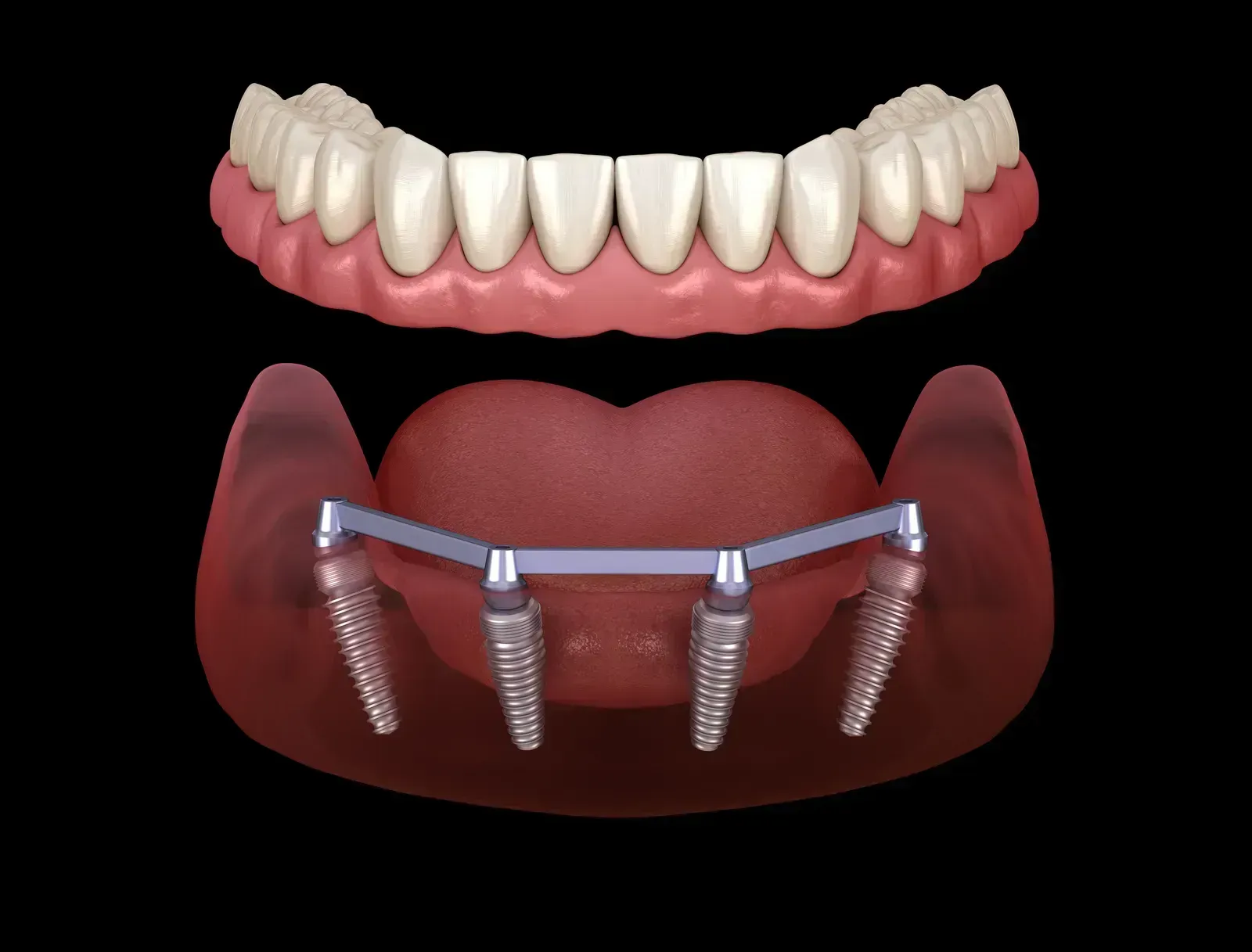
Once the post has integrated with the bone, a connector piece called an abutment is attached, and a custom-made crown is secured on top. The crown is shaped and shaded to match your surrounding teeth, so the result looks and feels natural when you smile, speak, or bite into food. For patients missing multiple teeth, implants can also support a bridge or a full denture, anchoring it firmly so it no longer shifts or needs adhesive.
Because the implant preserves bone rather than resting on top of the gum like a denture does, it also helps prevent the facial changes that often come with long-term tooth loss, such as a sunken jawline or premature wrinkling around the mouth. This is one of the lesser-discussed but important long-term health benefits of choosing implants over other options.
What's Involved in the Implant Procedure
The process typically unfolds in distinct phases rather than a single visit, and understanding this upfront helps set realistic expectations. It starts with a thorough evaluation, including digital x-rays or a 3D scan, to assess bone density, the position of nerves and sinuses, and the overall health of your gums. This planning stage is where we determine whether you need any preparatory work, such as a bone graft, before the implant itself can be placed.
During the surgical placement, the implant post is positioned into the jawbone under local anesthesia, and most patients describe the discomfort afterward as comparable to a tooth extraction rather than anything severe. After placement, a healing period of several months allows the bone to fuse solidly around the post before the permanent restoration is attached. In some cases, a temporary crown or denture can be worn during this healing window so you are never without a functional tooth.
Steps You Can Expect
- Initial consultation and imaging: We assess bone health and map out the ideal implant position before any procedure begins.
- Implant placement: The titanium post is surgically set into the jawbone in a single, focused appointment.
- Healing and osseointegration: Over roughly three to six months, bone fuses to the implant, creating a stable foundation.
- Abutment and crown placement: Once healed, the connector and custom crown are attached to complete the restoration.
If you are curious about the specifics of your own case, our What to Expect page breaks down the timeline in more detail based on common scenarios we see in our office.
Healing and Recovery Timeline
Recovery from implant surgery happens in two stages: the initial soft-tissue healing, which takes about one to two weeks, and the deeper bone integration, which takes several months. In the first few days, mild swelling, tenderness, and some bruising around the gum are normal and typically managed well with over-the-counter pain relief or a short course of medication we prescribe. Most patients return to work and normal routines within two to three days.
During the healing weeks that follow, we ask patients to stick to softer foods, avoid smoking (which significantly slows bone healing), and keep the surgical site clean with gentle rinsing. It is a quieter recovery than people expect; there is no cast or bandage involved, just a conscious effort to protect the area while the bone does its work underneath the gum line.
By the time the crown is placed, most patients report that the implant feels completely natural, often forgetting which tooth was replaced. We schedule follow-up visits throughout the process specifically to monitor healing progress and catch any concerns early, which is part of why implant success rates remain consistently high when the procedure is done thoughtfully.
Who Makes a Good Candidate
Most healthy adults missing one or more teeth are reasonable candidates for implants, but there are a few factors we evaluate closely. Adequate jawbone density is important since the implant needs enough solid bone to anchor into; patients who have been missing a tooth for a long time sometimes experience bone loss in that area and may need a bone graft first to build up a stable foundation.
Gum health matters just as much. Active gum disease needs to be treated before implant placement, since healthy, infection-free tissue is essential for successful healing and long-term stability. If you currently have signs of gum disease, such as bleeding or recession, our gum disease treatment can address that first so your mouth is in the best possible condition before moving forward.
Certain chronic conditions, like uncontrolled diabetes, or habits like heavy smoking, can affect healing, but they do not automatically rule someone out. We work with each patient individually, sometimes alongside their physician, to determine the safest path forward. The clearest way to know where you stand is through a dedicated evaluation, and our Am I a Candidate assessment is designed specifically to answer that question.
How Long Implants Typically Last
One of the biggest draws of implants is longevity. The titanium post itself, once fully integrated with the bone, is designed to last decades and in many cases will last a lifetime with proper care. This is a meaningful difference compared to a bridge, which typically needs replacement every ten to fifteen years as the supporting teeth and cement wear down.
The crown on top is the part most likely to need eventual attention, generally holding up well for fifteen to twenty-five years depending on wear, grinding habits, and how consistently you keep up with checkups. Routine dental cleaning and exams play a big role here, since we can catch small issues with the crown or surrounding gum tissue before they become bigger problems.
Good oral hygiene is really the deciding factor in long-term success. Brushing twice daily, flossing or using an interdental brush around the implant, and avoiding excessive force on the crown (like chewing ice) all contribute to how long your implant holds up. Patients who treat their implant like a natural tooth, rather than something that needs no attention, consistently get the best results.
Implants Compared to Bridges and Dentures
Deciding between an implant, a bridge, and a denture usually comes down to how each option affects your remaining healthy teeth and your daily comfort. A traditional bridge requires grinding down the two neighboring teeth to support the replacement, which means otherwise healthy enamel gets permanently altered. An implant, by contrast, stands independently and does not rely on adjacent teeth at all.
Removable dentures remain a reasonable option for some patients, particularly when cost or health factors limit surgery, but they come with ongoing tradeoffs: periodic relining, adhesive, and the sensation of a foreign object in the mouth. For patients missing most or all of their teeth, implant-supported options like full mouth implants offer a fixed, stable alternative that restores a much closer-to-natural chewing force and feel.
Cost is often the first question patients ask, and it is a fair one. Implants typically carry a higher upfront investment than a bridge or denture, but because they last so much longer and do not require the recurring adjustments or replacements those other options do, the long-term value frequently evens out or comes out ahead. We go over detailed pricing and financing during your consultation so you have real numbers to work with before deciding.
Key Takeaways
- Implants replace the entire tooth root, which helps preserve jawbone and facial structure long-term.
- The process involves placement, a healing period of several months, then the custom crown attachment.
- Initial recovery is brief, usually just a few days, while full bone integration takes longer.
- Good candidates have healthy gums and adequate bone, though grafting can address bone loss.
- With proper care, the implant post can last a lifetime, outperforming bridges and dentures over time.
Frequently Asked Questions
Is getting a dental implant painful?
The placement itself is done under local anesthesia, so you should not feel pain during the procedure. Afterward, most patients experience mild soreness and swelling for a few days, similar to what you might feel after a tooth extraction, and this is typically managed well with standard pain relief.
How many visits does the entire process take?
It varies by case, but generally you can expect a consultation, the surgical placement appointment, a healing period of several months, and then a final visit or two to attach the abutment and crown. Some patients need an additional bone grafting step beforehand, which adds a few months to the overall timeline.
Can I get an implant if I've been missing a tooth for years?
Yes, in many cases. Bone loss is common when a tooth has been missing for a long time, but a bone graft can rebuild the area so it can properly support an implant. We will assess your bone density with imaging during your consultation to determine the right approach.
Will my implant look and feel like a real tooth?
Implant crowns are custom shaped and shaded to blend naturally with your surrounding teeth, and because the post is anchored in bone, it feels stable when chewing or speaking. Most patients say that within a short time, they forget which tooth is the implant.
What if I'm missing several teeth, not just one?
Implants can support a bridge or a full denture rather than just a single crown, which means they are a viable option even for patients who have lost most or all of their teeth. We can walk through which configuration fits your mouth and budget during a consultation and review the full range of implant options available to you.
Making an Informed Decision About Your Smile
Choosing how to replace a missing tooth is not a decision to rush, and it should not be made without understanding your specific situation. Dental implants offer a level of stability, durability, and natural function that other options simply cannot match, but the right choice always depends on your bone health, your gum condition, and what you want your daily life to feel like for years to come.
If you have questions about whether an implant is right for you, or you simply want to understand your options before committing to anything, we are glad to walk through it together. You can find more detailed answers on our Dental Implant FAQs page, or reach out directly so we can look at your specific case and talk through what makes the most sense for your smile.