Thinking about dental implants but not sure where to start? You're not alone. Of all the questions our patients bring to the chair at Smiles of Niles, implant questions top the list more than almost any other topic. That makes sense: replacing a missing tooth is a bigger decision than most dental treatments, and it's natural to want clear, honest answers before you commit.
Missing teeth affect more than your smile. They change how you chew, how your jawbone holds its shape over time, and even how your other teeth shift and wear. Dental implants have become the standard recommendation among dentists for replacing missing teeth because they function like real tooth roots, something bridges and dentures simply cannot replicate. But the details - cost, timeline, candidacy, pain, maintenance - are where most patients get stuck.
This guide walks through the questions we hear most often, in plain language, so you can walk into a consultation already informed. Our goal isn't to oversell implants to every patient. It's to help you understand whether this treatment genuinely fits your situation, and what the process actually looks like from start to finish.
What Exactly Is a Dental Implant?
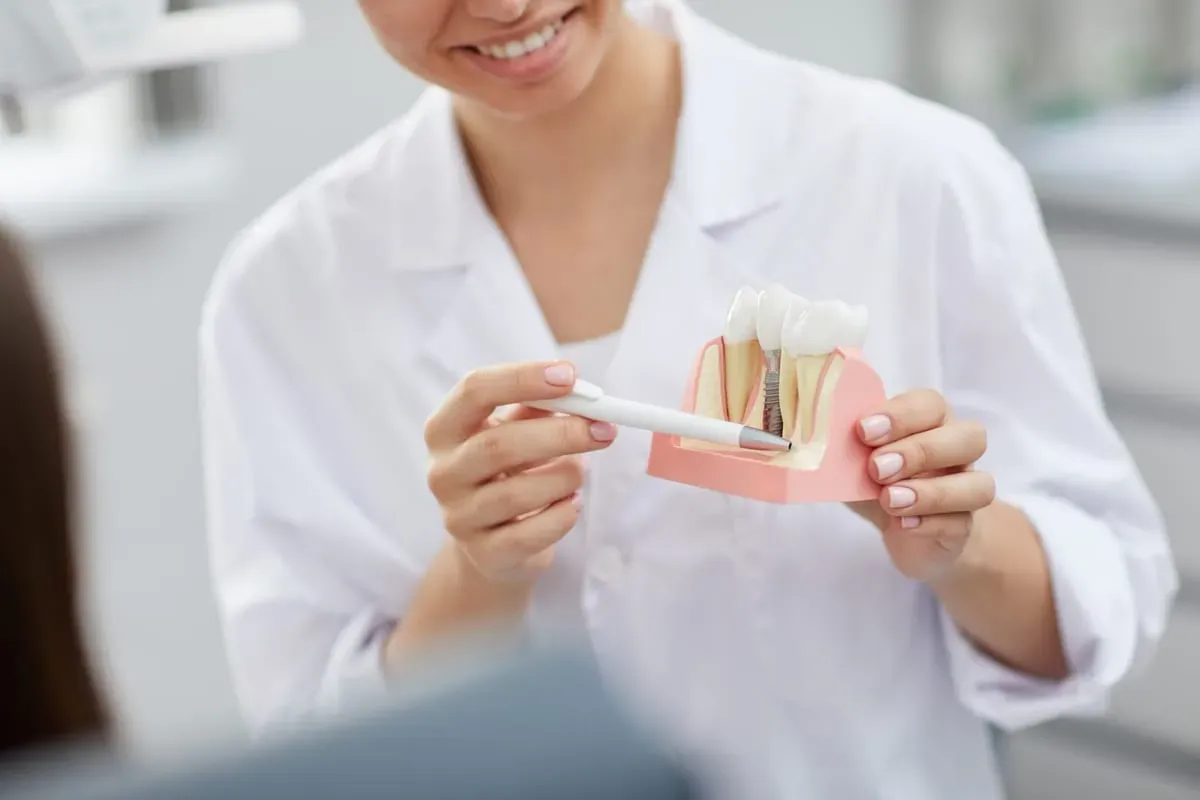
A dental implant is a small titanium or titanium-alloy post that a dentist or oral surgeon places directly into the jawbone, where it acts as an artificial tooth root. Over the following months, the bone fuses to the post through a process called osseointegration. Once that fusion is complete, the implant provides a stable, permanent anchor for a replacement tooth.
The visible crown attached to that post is custom-made to match the size, shape, and shade of your natural teeth. Unlike a removable denture, an implant-supported crown doesn't shift when you eat or speak, and unlike a traditional bridge, it doesn't rely on grinding down healthy adjacent teeth for support. The implant stands on its own.
Implants can also be used to anchor multiple replacement teeth at once. A single implant might support one crown, while a set of four to six implants can anchor a full arch of replacement teeth, often called an implant-supported bridge or "All-on-4" style restoration. The underlying principle stays the same: a titanium root replaces what was lost, giving the restoration a solid foundation.
Am I a Good Candidate for Implants?
Most healthy adults missing one or more teeth are reasonable candidates for dental implants, but a few factors matter more than age. The biggest consideration is bone density in the jaw. Because the implant post needs enough solid bone to fuse into, patients who have been missing a tooth for many years sometimes experience bone loss in that area and may need a bone graft before implant placement.
Gum health matters just as much. Active gum disease needs to be treated and stabilized before implant surgery, since healthy gum tissue is essential for the implant to heal properly and stay free of infection. Certain chronic conditions, like uncontrolled diabetes, can also slow healing, and heavy smoking is known to reduce implant success rates because it restricts blood flow to the gums and bone.
None of these factors are automatic disqualifiers. We've successfully placed implants for patients who needed bone grafting first, and for patients managing diabetes under good medical care. The only way to know your specific situation is through a consultation that includes a dental exam, imaging such as a CT scan or panoramic X-ray, and a review of your medical history.
- Sufficient jawbone density: Enough healthy bone volume is needed to support and hold the implant post securely.
- Healthy gum tissue: Gum disease must be treated and controlled before surgery to reduce infection risk.
- Managed overall health: Conditions like diabetes or osteoporosis need to be stable and under a physician's care.
- Smoking habits: Reducing or quitting smoking significantly improves healing and long-term implant success.
What Does the Procedure and Timeline Look Like?
Implant treatment unfolds in stages rather than a single appointment, and understanding that timeline helps set realistic expectations. The first step is a thorough consultation with imaging, which lets us map out the exact position for the implant and check bone quality in the area. If a bone graft or tooth extraction is needed first, that happens before the implant itself is placed, and healing time is built into the plan.
Placing the implant post itself is typically done with local anesthesia and is a relatively quick procedure, though recovery and healing time is where most of the calendar time goes. Osseointegration, the process of bone fusing to the titanium post, generally takes between three and six months, depending on the location in the mouth and the individual patient's healing response. Lower jaw implants often heal faster than upper jaw implants because the bone tends to be denser.
Once integration is confirmed, a small connector piece called an abutment is attached, and impressions are taken to craft your final crown, bridge, or denture. From initial consultation to final restoration, most single-implant cases take anywhere from three to eight months. More complex cases involving grafting or multiple implants can take longer, but the result is a replacement tooth built to last for decades rather than years.
Is It Painful, and What Is Recovery Like?
This is probably the question we hear with the most anxiety behind it, and the honest answer tends to reassure most patients. The implant placement itself is performed under local anesthesia, so you won't feel pain during the procedure. Many patients describe the experience as comparable to having a tooth extracted, sometimes easier, since the surgical site is more contained.
After the anesthesia wears off, it's common to experience mild to moderate soreness, swelling, and some bruising for a few days. Over-the-counter pain relievers are usually enough to manage discomfort, though we may prescribe something stronger for the first day or two depending on the complexity of your case. Most patients return to work and normal routines within one to three days.
Full healing, the osseointegration period mentioned earlier, takes longer but doesn't involve ongoing pain. During this window, we recommend a softer diet initially, good oral hygiene around the surgical site, and avoiding smoking, which can meaningfully slow healing. We'll give you a specific set of aftercare instructions tailored to your procedure, and we check in during the healing process to make sure everything is progressing as expected.
How Long Do Dental Implants Actually Last?
The titanium implant post itself is designed to last a lifetime once it has successfully fused with the jawbone. Long-term studies consistently show success rates above 95 percent at the ten-year mark, which is a notably higher durability figure than bridges or dentures typically achieve. This is one of the core reasons implants are considered the long-term standard for tooth replacement.
The crown attached to the implant is a separate matter. Like a natural tooth, the visible crown experiences normal wear from chewing and can need replacement after roughly ten to fifteen years, depending on the material used and how well it's maintained. This is a straightforward replacement of the crown portion only, not a repeat of the surgical implant placement.
Longevity depends heavily on maintenance. Patients who keep up with brushing, flossing around the implant, and regular dental checkups see far better long-term outcomes than those who neglect oral hygiene. Peri-implantitis, a gum infection around an implant similar to gum disease around natural teeth, is the leading cause of implant failure, and it's largely preventable with consistent care and professional cleanings.
What Do Implants Cost, and Does Insurance Help?
Cost is often the deciding factor patients wrestle with, and it's fair to say implants typically carry a higher upfront price than dentures or a traditional bridge. The total cost depends on several variables: whether a bone graft or extraction is needed first, the number of implants being placed, the type of restoration (a single crown versus a full arch), and the materials chosen for the final tooth.
Dental insurance coverage for implants varies widely between plans. Some plans cover a portion of the procedure, particularly the crown or restoration portion, while others treat the implant itself as a cosmetic or elective expense with limited or no coverage. We recommend reviewing your specific plan benefits with us during your consultation, since we can often help clarify what's covered before treatment begins.
It's worth weighing cost against lifespan when comparing options. A denture or bridge may cost less upfront, but typically needs adjustment, relining, or replacement every five to ten years, while a well-maintained implant can last decades without that repeated expense. We also offer financing options for patients who want to spread the cost of treatment over time, and we're happy to walk through a detailed, itemized estimate before any decision is made.
Key Takeaways
- Dental implants replace both the tooth root and the visible crown, giving a stable, long-term alternative to bridges and dentures.
- Candidacy depends on bone density, gum health, and overall medical history - most of these factors can be addressed before treatment.
- The full process, from consultation to final restoration, typically takes three to eight months, with healing being the biggest time factor.
- Discomfort is manageable and short-lived, while the implant itself can last a lifetime with consistent oral hygiene.
- Cost varies by case complexity, and reviewing your insurance benefits early helps avoid surprises.
Frequently Asked Questions
Can I get an implant immediately after a tooth is pulled?
In some cases, yes. This is called immediate implant placement, and it works well when the surrounding bone and gum tissue are healthy enough to support the implant right away. Other times, we recommend letting the extraction site heal for a few months first to make sure the bone is in good condition before placing the implant.
Will people be able to tell I have a dental implant?
No. The crown attached to your implant is custom-shaped and shaded to match your natural teeth, so it blends in naturally with your smile. Most patients find that friends and family can't tell which tooth is the implant once the restoration is complete.
What happens if my jawbone has already deteriorated?
Bone loss doesn't rule out implants, it just adds a step. A bone graft can rebuild the volume and density needed in the area, using either your own bone, donor bone, or synthetic graft material. After the graft heals, which typically takes a few months, the implant can be placed as usual.
Do dental implants require special care compared to natural teeth?
Care is similar, not radically different. You'll brush and floss around the implant just as you would a natural tooth, though we may recommend a specific floss type or water flosser to clean around the crown effectively. Regular checkups and cleanings remain important for catching any early signs of gum irritation around the implant.
Can I replace an entire row of missing teeth with implants?
Yes. Rather than placing an individual implant for every missing tooth, a full arch can often be supported by four to six strategically placed implants, which then anchor a fixed bridge or denture. This approach, sometimes called full-arch implant restoration, gives patients missing most or all of their teeth a stable, non-removable solution.
Finding the Right Answers for Your Situation
Dental implants raise real, practical questions, and getting clear answers matters before you commit to a procedure that involves months of planning and healing. The information here covers what most patients want to know, but your own situation, your bone health, your medical history, your budget, and your goals for your smile, is unique to you.
At Smiles of Niles, we spend real time walking patients through these exact questions during a consultation, using imaging and a full exam to give you a specific answer rather than a general one. If you've been putting off replacing a missing tooth because the unknowns felt overwhelming, a conversation with our team is the most direct way to get the clarity you need and decide what's right for your smile.